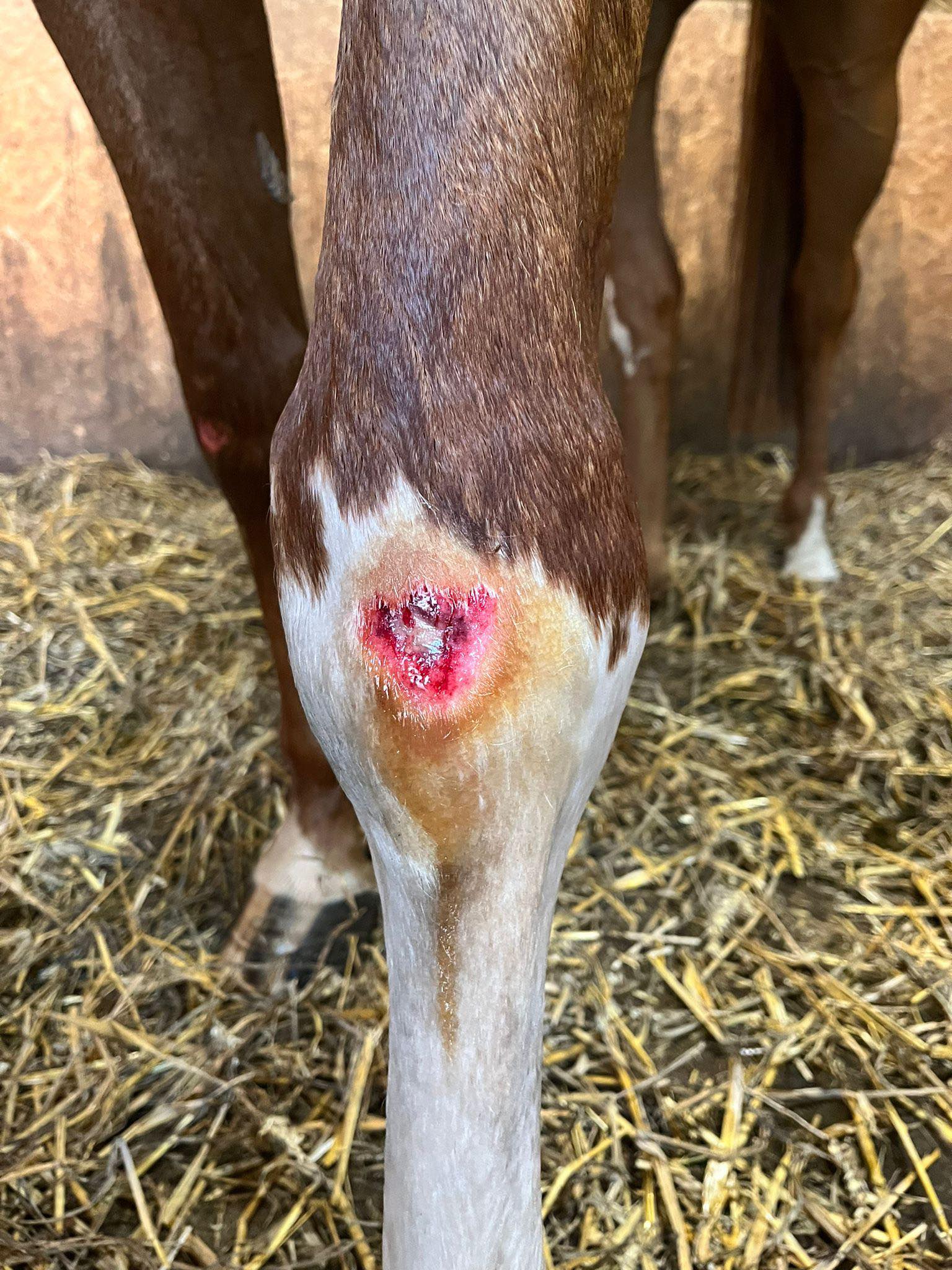
We recently suffered an injury with our beloved horse, Floris, who had sustained an injury to his knees and this prompted me to write a blog on wound management.
Horses, with their active lifestyles and dynamic environments, are susceptible to various types of injuries and wounds. Also they do have a self destruct button I sometimes think!
If your horse sustains a cut, proper wound management is crucial for minimizing infection risk, promoting healing, and ensuring the overall well-being of these magnificent animals. In this guide, we’ll explore the essentials of wound management in horses, from initial assessment to the healing process. However, it is always recommended to call your vet for assistance and guidance.
1. Initial Assessment and First Aid
When a horse sustains a wound, a swift and accurate assessment is the first step. Here’s what to do:
- Safety First:** Ensure your safety and that of the horse before approaching.
- Assessment:** Evaluate the wound’s size, depth, location, and whether any foreign objects are present.
- Control Bleeding:** Apply pressure to control bleeding using a clean cloth or bandage.
- Cleanse the Wound:** Flush the wound with a sterile saline solution to remove debris and contaminants.
2. Calling the Vet
Serious wounds, wounds involving joints or tendons, or wounds in sensitive areas like the head will almost definitely require veterinary intervention. They can guide you on immediate care and determine if sutures, medications or hospitalisation is required. At this stage try not to panic, this will only upset you and your horse. If you have a good relationship with your vet, you can text pictures or video initially to show where the wound is and the seriousness of the wound so that they can determine if a visit is required.
3. Wound Dressing and Care
- Antiseptic Solution:** Clean the wound with an antiseptic solution, avoiding anything that could damage healthy tissue. Speak to your vet to stock the correct solution in your first aid kit!
- Topical Antibiotics:** Apply a veterinarian-recommended topical antibiotic to prevent infection. This will need to be prescribed by your vet for this horse. Don’t use out of date creams or those prescribed to another horse.
- Dressing:** Cover the wound with a sterile, non-stick dressing to protect it from dirt and debris. However, your vet may advise to let the air get to it.
- Change Dressings:** if a dressing is required you must regularly change dressings to maintain cleanliness and avoid infection.
4. Monitoring and Healing
- Restricted Movement:** Dependent on where the wound is on your horse, you may have to limit the horse’s movement to prevent excessive stress on the wound. If you have to make a small paddock or keep on box rest – make sure your horse is happy so that he is does not cause further injury .
- Promoting Healing:** Depending on the wound’s location, icing or cold hosing the wound can help reduce swelling. Avoid the flies and apply topical thick creams over the wound to protect from flies dirt and debris if not covered, again if possible turnout at night .
- Nutrition:** A balanced diet rich in protein, vitamins, and minerals supports the body’s healing process.
5. Signs of Infection
Watch for signs of infection, including increased swelling, heat, discharge, foul odor, or a sudden increase in pain. Contact your veterinarian if you suspect infection.
6. Suture Removal
If sutures were used, your vet will determine when they should be removed based on the wound’s healing progress.
7. Scar Management
After the wound has healed, scar tissue may form. Gentle massage and certain ointments can help prevent excessive scar tissue buildup.
8. Psychological Care
Remember, wounds can be stressful for horses and owners. Spend time reassuring yourself and your horse to reduce anxiety associated with the injury.
If your horse is insured, complete the claim form you have been sent and pass to your vet who will send to your insurer for authorisation and payment, allowing you to have some R and R with your horse.
Conclusion
Effective wound management in horses involves prompt assessment, careful cleaning, proper dressing, and vigilant monitoring. While minor wounds can often be managed with basic first aid, more serious injuries require veterinary attention. With the right care and attention, you can help your equine companion recover swiftly and resume their active, healthy lifestyle. Always consult your veterinarian for specific guidance tailored to your horse’s needs.
To insure your horse or pony call us on 01233 770802 or email info@brookhurstrisk.com